
Global tech major Adobe Systems' chief executive Shantanu Narayen on Thursday said creativity, and not software code, will be the main driver of India's economy in the future.

While Paytm (One97 Communications) is not completely past regulatory hurdles, its share price has gained in the last month or two. The Paytm handle migration is complete along with FDI clearance necessary for the Payment Aggregator (PA) license. UPI consumer data indicates stable market share, and expansion in partner networks in financial distribution. All this implies Paytm could be set to meet guidance of turning Adjusted Ebitda breakeven by Q4FY25 (ex of UPI-incentives).

The number of frauds in the banking sector increased over four times in the past five years to 36,075.

Hyundai Motor India (HMIL) raised Rs 8,315 crore from anchor investors on Monday, setting the stage for the country's biggest-ever maiden share sale. The Indian arm of the South Korean carmaker Hyundai Motor Company (HMC) allotted 42.4 million shares to 225 funds at Rs 1,960 apiece, the higher end of its price band. Among the investors receiving allotments were the Singapore government's sovereign wealth fund (GIC), New World Fund, and Fidelity.

The cheque truncation system, which is currently operational at the major clearing houses of the country, has stabilised well and it has made large efficiency gains: RBI

During his Delhi Metro ride on Friday, Prime Minister Narendra Modi advised students to make cashless payments and share their experiences through blogs.
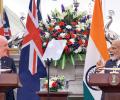
India and New Zealand have signed a pact to institutionalize their defence ties and vowed to boost cooperation in the Indo-Pacific. Prime Minister Narendra Modi raised concerns about anti-India activities by some illegal elements in New Zealand with his Kiwi counterpart Christopher Luxon. The two sides also signed six agreements to enhance cooperation in areas including education, sports, agriculture, and climate change. They also agreed to prepare a roadmap for cooperation in the defence industry sector and explore early implementation of cooperation in the digital payments sector.

While a giant, it's a nimble-footed one, and is growing at a speed that even some of its private sector peers find enviable.
Between FY18 and FY24, it doubled its balance sheet. Despite being a late entrant in some segments, it has been able to grab market share, observes Tamal Bandyopadhyay.

The currency in circulation (CIC) declined by Rs 7,600 crore in the Diwali week, making it the first such happening in two decades, a report said on Thursday. This was made possible courtesy of a greater reliance on digital payments by people, the report by economists at SBI said, adding that the Indian economy is undergoing a structural transformation at present. They clarified that the Diwali week in 2009 had also witnessed a marginal Rs 950 crore decline in currency in circulation, but that was purely due to the economic slowdown amid the global financial crisis.

Citing various macroeconomic parameters that are doing pretty well, India's G20 Sherpa and former CEO of Niti Aayog Amitabh Kant projected that the country is all set to overtake Japan as 4th largest economy in the world by 2025. The size of India's GDP is currently ranked 5th, after the US, China, Germany, and Japan. It overtook the UK in 2022.

Mint Road, on December 21, 2023, flagged the role of self-regulatory organisations (SROs) in strengthening the compliance culture in regulated entities (REs) and providing a consultative platform for policymaking. It also decided to issue an omnibus framework for SROs.

The Reserve Bank will launch the first pilot for retail digital rupee in Mumbai, New Delhi, Bengaluru and Bhubaneswar on December 1, and later expand it to nine more cities in the initial phase. This follows a month after the RBI had started a pilot in the digital rupee - wholesale segment on November 1. The Reserve Bank announces the launch of the first pilot for retail digital rupee (e?-R) on December 1, 2022, the central bank said in a statement on Tuesday.
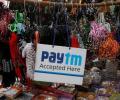
Fintech firm One97 Communications, which owns the Paytm brand, has received support from merchants, and it assured them of continuity of services without any disruption, the company said in a blog on Sunday. The blog post came amid the recent crisis around Paytm Payments Bank Limited (PPBL), an associate company of Paytm, which has been barred by the RBI from accepting deposits or top-ups in customer accounts, wallets, FASTags and other instruments after February 29.
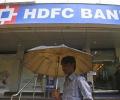
The country's largest private lender HDFC Bank is planning to facilitate a shift in its payments module from the existing core banking platform. This would ensure minimal payments downtime, even if core banking is not available. "This 15-month project will be followed by hollowing the customer-master modules from its existing core systems. "It will ensure a single system of record for customers across various products," said Sashidhar Jagdishan, managing director (MD) & chief executive officer (CEO), in the annual report for 2021-22.

The US Trade Representative noted that India's average applied tariff rate stood at 17% per cent, the highest of any major world economy.

The average ticket size (ATS) of all transactions on United Payments Interface (UPI) in H1 2023 was pegged at Rs 1,604, marking a 10 per cent decline, compared to Rs 1,774 in H1 2022, according to data from Worldline India's Digital Payments Report. The reduction in the overall ATS on UPI is a good sign, suggesting a deeper embedding of UPI as it is being used for smaller or micro-transactions, and the dip is driven by the growth in person-to-merchant (P2M) transactions, the report said. The ATS of P2M transactions dipped 21 per cent from Rs 839 in H1 2022 to Rs 659 in H1 2023.

Tax evaders, BEWARE! The Income Tax department is using AI data analytics to bust fake deductions, flag HRA fraud, and trace digital footprints.

In the backdrop of the crisis brewing at Paytm Payments Bank, major fintech companies are ramping up their workforce and inducting new faces in their leadership teams, industry sources said on Wednesday. Users will not be able to add funds to their Paytm Payments Bank Wallet after February 29, though they will still be able to use the services and the existing balance in the wallets, according to the Reserve Bank of India (RBI) diktat. Industry sources said that competitors to Paytm are investing heavily in offline payments while doubling their salesforce.

'Credit card debt comes with high interest cost and stringent penalties.' 'If you do not repay on time, the costs balloon.'

Mutual funds aspirants have the option of snapping up smaller AMCs or applying for a new licence.

Uncertainties on account of COVID-19 pandemic have increased the demand for currency notes not only in India but across the globe, official sources said, dismissing the criticism that demonetisation has failed to reduce cash in the economy. Government sources said that growth of the digital payments system post-demonetisation will ultimately curb the dependence on cash. Official data points out a jump in digital payments through different modes, including plastic cards, net banking and Unified Payments Interface (UPI).

In the first such collaboration for India, the country's flagship payments platform, the Unified Payments Interface (UPI), and Singapore's PayNow payment system have launched a real-time cross-border payment linkage system. The linkage, which was launched by Prime Minister (PM) Narendra Modi and Singapore's PM Lee Hsien Loong on Tuesday, was kicked off by a live cross-border transaction between Reserve Bank of India Governor Shaktikanta Das and Monetary Authority of Singapore managing director Ravi Menon, using mobile phones.

Ola Electric Mobility Ltd on Friday said ministries of heavy industries, and road transport and highways have sought information from the company over gap in vehicle registrations as per the Vahan portal and sales as per the firm's regulatory filing. Besides, the ministries have also sought clarification on reports "regarding non-compliance to the requirement of trade certificates", Ola Electric Mobility said in a regulatory filing.

In 2024, the National Payments Corporation of India (NPCI) approved 20 third-party Unified Payments Interface (UPI) applications, a record since UPI's launch in 2016. This surge reflects growing interest from financial technology (fintech) companies, driven by the integration of credit products like UPI-linked credit cards and pre-approved credit lines.

The finance ministry expects a broad-based moderation in inflationary pressures on the back of an anticipated reduction in food prices as a result of the uptick in summer sowing. The retail inflation rate remained stubbornly clung to the 5 per cent mark in seven of the past eight months. "Core inflation is trending downwards, indicating a broad-based moderation in price pressures... Driven by strong domestic growth and benign global commodity prices, core inflation is declining continuously.

The Income-Tax (I-T) Department has detected widespread tax evasion involving cryptocurrencies and, according to media reports, has issued emails to thousands of defaulting taxpayers seeking transaction details. Investors must understand the tax rules governing crypto assets and respond promptly to these emails.

While mobility aggregators such as Rapido and Uber have welcomed the decision, gig workers associations and unions remain concerned.

Financial technology (fintech) firms PhonePe and BharatPe announced on Sunday that they have settled long-standing legal disputes regarding the use of the trademark with the suffix 'Pe' in their brand names. The settlement concludes five-year-long legal disputes across multiple courts. Both companies have decided to withdraw all opposition against each other in the Trade Marks Registry.

'We went from zero to about 10 million users in three months. Paytm came out with the wallet play and we came out with the UPI play.'

The number of internet users in rural India increased 18 percent last year, faster than growth in urban areas and continuing a trend that started two years ago. Internet users in urban India increased 5 percent in 2021. Rural India has 351 million users, or 37 percent of people there, according to a report by the Internet and Mobile Association of India (IAMAI) and data analytics company KANTAR.

Finance Minister Nirmala Sitharman on Monday held a performance review meeting with heads of public sector banks and asked them to make concerted efforts to garner deposits. Deposits have been growing 300-400 basis points lower than the credit growth in the last few months, creating an asset-liability mismatch for banks. During deliberations on the deposit mobilisation, she said that while the credit growth has picked up, mobilisation of deposits could further be improved to fund the credit growth sustainably, and asked banks to make concerted efforts to garner deposits by conducting special drives.
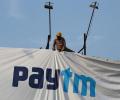
The RBI on Friday asked Paytm Payments Bank to stop opening new accounts amid "material supervisory concerns" observed in the bank. "Reserve Bank of India has today, in exercise of its powers, inter alia, under section 35A of the Banking Regulation Act, 1949, directed Paytm Payments Bank Ltd to stop, with immediate effect, onboarding of new customers," the central bank said in a statement. The bank has also been directed to appoint an IT audit firm to conduct a comprehensive system audit of its IT system.

The government on Wednesday asked e-commerce platforms to conduct annual internal audits to make sure that they are not resorting to manipulative tactics to mislead consumers and prevent them from making right choices -- a technique commonly referred to as dark pattern -- and submit reports to the Department of Consumer Affairs (DoCA). It comes just a week after Uber was issued a notice by the Central Consumer Protection Authority (CCPA) over its "advance tip" feature.

Hyundai Motor India Limited's (HMIL's) record Rs 27,870 crore initial public offering (IPO) may not have set the primary market alight with sky-high subscription levels, but it has spelled a windfall for the five investment banks steering the share sale. The Indian arm of the South Korean carmaker paid Rs 493 crore - 1.77 per cent of the issue size - in fees and commissions to the book running lead managers (BRLMs), marking the largest-ever payout for an IPO in the country.
With the banking regulator lifting restrictions on HDFC Bank's digital initiatives, the largest private sector lender is now girding up to launch a clutch of customer-facing applications (apps), which will act as stepping stones in its journey to morph into a technology (tech)-led bank from a conventional one. Following repeated outages in its digital offerings, the Reserve Bank of India (RBI) had barred HDFC Bank from issuing new credit cards in December 2020 and prevented it from going ahead with its digital launches. The embargo on issuing credit cards was lifted in August 2021 and the ban on digital launches was lifted last week.

Office space owners are looking at good times ahead as rentals are expected to rise due to demand for Grade A office spaces outpacing supply that has been sluggish due to construction delays, long gestation periods and developers' interests shifting to residential.

Private sector banks reported the maximum number of frauds in 2022-2023.

India maintains "high" import duties on a wide range of American goods such as agricultural items, drug formulations, and alcoholic beverages, besides imposing non-tariif barriers, a US report has said. A day before announcing reciprocal tariffs, the US Trade Representative (USTR) released the 2025 National Trade Estimate (NTE) Report on March 31.
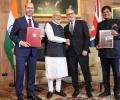
India and the UK on Thursday inked a landmark free trade agreement (FTA) that will cut tariffs on British whisky, cars and an array of items, besides boosting bilateral trade by around $34 billion annually.

Telecom service providers and the Maha Kumbh Mela administration are on their toes to ensure smooth connectivity at the grand event set to witness record teledensity.
